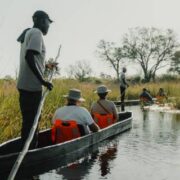
Once on the road, guiding becomes a balance between responsibility and engagement. I monitor road conditions, manage time, and provide commentary through the PA system, sharing information about landscapes, wildlife, history and local cultures. At the same time, I remain alert to traveller needs, whether it’s a comfort stop, a medical concern, or simply reassurance during long drives. Border crossings, fuel stops and police checkpoints are part of daily life, and handling them calmly and professionally is essential to maintaining group confidence.
Throughout the day, I also act as a problem-solver. Delays, weather changes, vehicle issues or unexpected route diversions require quick thinking and adaptability. Lunch stops are planned with practicality in mind, often at local eateries or safe roadside areas, offering travellers an authentic experience while keeping the schedule on track. Every decision must balance time, safety, comfort and the overall experience of the group.
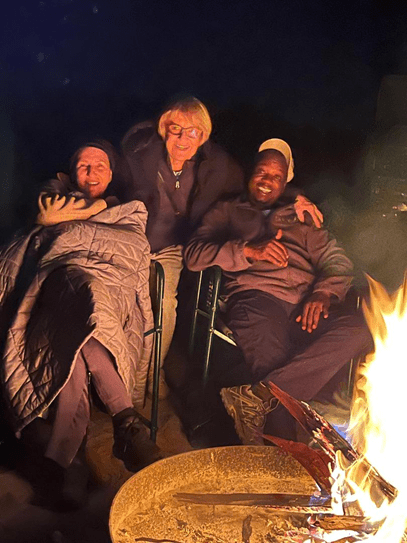
Evenings are often the busiest part of the day. On arrival at camp, I guide travellers through setting up tents or checking into accommodation, organise dinner, and confirm the following day’s logistics. This is also when emotional support becomes important, as travellers reflect on fatigue, excitement or homesickness. As a guide, listening, encouraging and maintaining group morale is just as important as managing logistics.
When the camp quiets down, my work is not yet done. I review the day, update records, check vehicle needs and prepare for the next morning. Only once everything is in order do I rest, knowing that tomorrow will bring new challenges and discoveries. A day in the life of a Nomad guide is demanding, but deeply rewarding. It requires leadership, resilience and passion for travel, and it offers the privilege of guiding people through Africa while shaping unforgettable journeys.
Written by Gift Mhende