If you’re planning a Tanzania trip around the wildebeest migration, the first thing to get straight is that the
Serengeti and Ngorongoro Crater aren’t the same stop with two names. They’re neighbouring
ecosystems with different geography, different wildlife rhythms, and different reasons to visit; and
knowing how they sit on the map is what actually decides your route and your timing.
Key takeaways:
- The Serengeti and Ngorongoro Crater sit less than a day’s drive apart in northern Tanzania,
which is why almost every itinerary links them into one trip rather than treating them as separate
destinations. - Migration timing is seasonal, and geographically, the herds move through different parts of the
Serengeti at different times of year, so “best month” depends on which part of the migration story
you want to see. - Ngorongoro Crater isn’t part of the migration route at all. It’s a contained volcanic caldera with
resident wildlife year-round, which is exactly why it’s worth building into a trip regardless of when
you go.
Where the Serengeti and Ngorongoro actually sit on the map
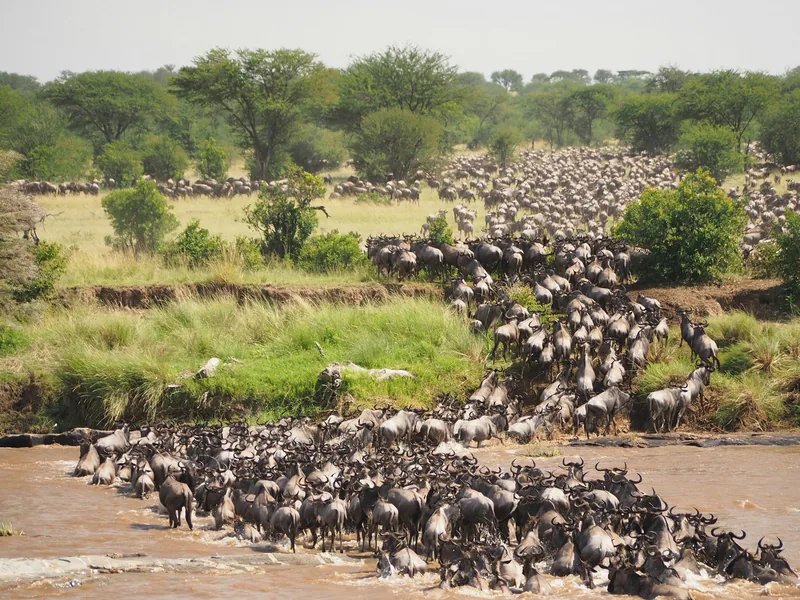
The Serengeti ecosystem stretches across roughly 30,000 square kilometres of northern Tanzania, spilling over the border into Kenya’s Maasai Mara. It’s flat, open grassland for the most part, which is what makes it the stage for the wildebeest migration; an almost circular annual movement of over a million wildebeest and hundreds of thousands of zebra, following the rain and the grass.
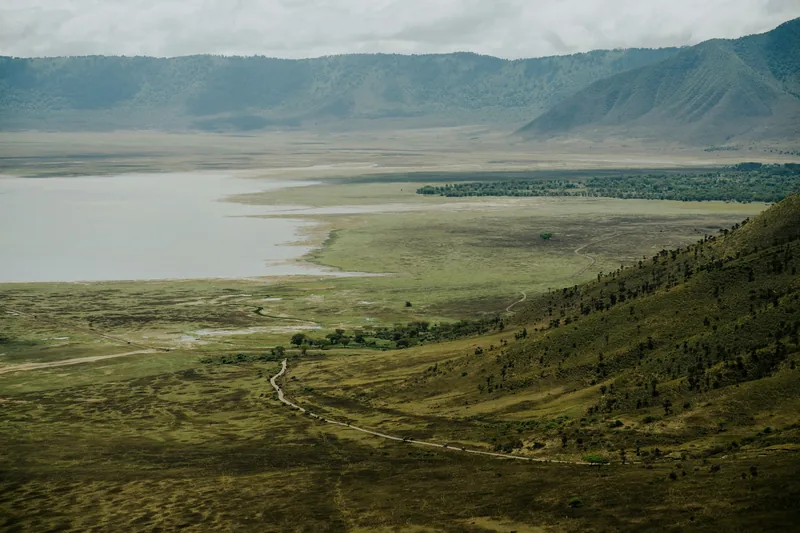
Ngorongoro Crater sits at the eastern edge of that ecosystem, inside the Ngorongoro Conservation Area, and it’s geologically a completely different thing. It’s the collapsed caldera of an extinct volcano; a natural bowl with steep walls and a wildlife-dense floor that behaves almost like a self-contained reserve. Most Tanzania itineraries drive between the two in half a day, which is why a “Serengeti and Ngorongoro tour” is really one trip through two adjoining but distinct landscapes, not a long-haul multi-stop safari.
Most routes enter through Arusha, Tanzania’s northern safari hub, then work through the Ngorongoro Conservation Area before continuing into the Serengeti proper, so Arusha is worth treating as your logistics base even if you don’t spend much time there. Coming from Zanzibar instead simply adds a short domestic flight to Arusha or Kilimanjaro before the road leg begins.
The best months to catch the migration herds
There’s no single “best month” for the Serengeti migration; there’s a best month for whichever part of it you want to see, because the herds are moving through a specific part of the ecosystem at any given time of year.
Broadly: the southern Serengeti plains see the calving season in the first few months of the year, when the grass is short, and predators are close behind the newborn calves. As the dry season sets in, the herds push north and west through the central and western Serengeti in search of fresh grazing. By mid-year they’re approaching the Grumeti and Mara river systems in the north, where the migration’s famous, chaotic river crossings happen through the dry months. As the rains return later in the year, the herds turn south again, moving back down toward the plains where the cycle restarts.
Because the exact timing shifts year to year with the rains, it’s worth building some flexibility into your dates rather than locking onto one narrow window; a guide who’s tracking the herds in real time will get you closer to the action than a fixed date on a calendar. Our monthly guide to the wildebeest migration breaks the cycle down month by month if you want to plan around a specific stage of it.
Each stage of the migration has its own character, too, not just its own location. Calving season draws in predators that follow the herds specifically for the vulnerable newborns, so the southern plains in the first few months of the year are as much about lion and cheetah action as about the wildebeest themselves. The river crossings later in the year are the more dramatic, higher-stakes stage; crocodiles wait in the Grumeti and Mara rivers, and herds bunch up on the banks before committing to the crossing. If you’re choosing between the two, calving season tends to suit travellers who want calmer, more predictable sightings, while crossing season suits those after the classic, high-adrenaline migration footage.
How many days to give this route
Two nights in the Ngorongoro area and three to four in the Serengeti is a reasonable minimum to avoid feeling rushed; enough time in the crater for both a full-day descent and a rim-area game drive, and enough time in the Serengeti to explore more than one section of the park rather than staying static near the entrance gate. Shorter trips are possible and still worthwhile, but they tend to compress you into a single Serengeti sector, which matters more during migration season, when the herds might simply be somewhere else on the day you arrive.
Ngorongoro Crater: why the geography makes it different
Ngorongoro isn’t on the migration route, and that’s precisely its appeal. The crater floor covers roughly 260 square kilometres, ringed by walls that rise around 600 metres above it, and that enclosed geography concentrates wildlife into a relatively small, accessible space. Lion, elephant, hippo, and one of Africa’s densest populations of black rhino are all resident here year-round, along with the highest lion density recorded anywhere on the continent.
Because the wildlife doesn’t migrate out of the crater the way the wildebeest and zebra migrate across the Serengeti, timing your visit is far less critical here. You’re not chasing a herd through open plains; you’re descending into a bowl where the animals are, more or less, already waiting. That’s what makes pairing it with the Serengeti such a natural combination: one leg of the trip depends heavily on timing, the other doesn’t.
Mapping the route through a Nomad Africa itinerary
A typical Serengeti-and-Ngorongoro route runs from Arusha or Zanzibar, into the Ngorongoro Conservation Area for a crater descent, then on into the Serengeti’s central or northern sectors depending on where the migration is that month. Our Zanzibar & Ngorongoro Crater tour covers this combination over 10 days, pairing the crater and northern Tanzania safari circuit with a beach stretch on Zanzibar; useful if you want the safari and the coast in one trip rather than two. For a shorter, more focused option, Tanzania On The Go is a 7-day hosted route built specifically around this northern circuit.
If you’re weighing up whether to base the whole trip in Tanzania or split time between Kenya and Tanzania, our Kenya vs Tanzania comparison walks through the trade-offs in more detail.
FAQ
Can you visit the Serengeti and Ngorongoro Crater on the same trip?
Yes; they’re close enough together that almost every northern Tanzania itinerary includes both, usually as consecutive legs of the same road route.
What’s the best month to see the wildebeest migration?
It depends which stage you want: calving season runs through the first few months of the year in the southern plains, and the river crossings typically happen during the dry months from around July to September in the north. There’s no month where the migration “stops”; it’s continuous, just in different locations.
Do you need to time a Ngorongoro Crater visit around the migration?
No. The crater’s wildlife is resident year-round and isn’t part of the migration route, so it’s a strong add-on to any Tanzania itinerary regardless of when you travel.
How many days do you need for a Serengeti and Ngorongoro trip?
Most itineraries run 7 to 10 days to properly cover both, including travel time between them and enough game-drive time in each to make it worthwhile rather than rushed.
Is Ngorongoro Crater safe to visit outside migration season?
Yes, and there’s no real “off season” for it; the wildlife is resident year-round, so the crater is worth visiting whenever your Serengeti timing happens to fall.
Ready to plan the route
Once you know how the two areas relate to each other on the map, the planning question becomes less about “which one” and more about “how much time in each.” If you want a route built around the current migration timing rather than a generic template, get in touch with our team; we run these routes often enough to know where the herds actually are this season.